Ultimate Guide to Beer Tap Selection: Types, Features, and Cost-Effectiveness
Are you overwhelmed by the variety of beer taps available on the market? Whether you're looking to set up a beer dispensing system at home or sourcing cost-effective beer taps for your bar, this article will provide you with the most comprehensive information and advice.
Last Updated: August 2025 | Estimated Reading Time: 12 Minutes
This Article Will Answer For You:
- How to choose the right beer tap for different usage scenarios?
- How do different materials of beer taps affect the taste and hygiene of beer?
- How to evaluate the internal structure and valve design of beer taps to ensure the pure flavor of beer?
- How to choose the most cost-effective beer tap based on your budget and maximize its long-term performance?
- What are the different focus points for commercial users and home users when purchasing beer taps?
Types of Beer Taps
- Based on Usage
- Home Beer Taps: Suitable for home use, usually simple in structure, easy to operate and clean.
- Commercial Beer Taps: Suitable for bars, restaurants, and other places, durable, high beer output, and can be used continuously for a long time.
- Portable Beer Taps: Small and easy to carry, suitable for outdoor activities or gatherings.
- Based on Material
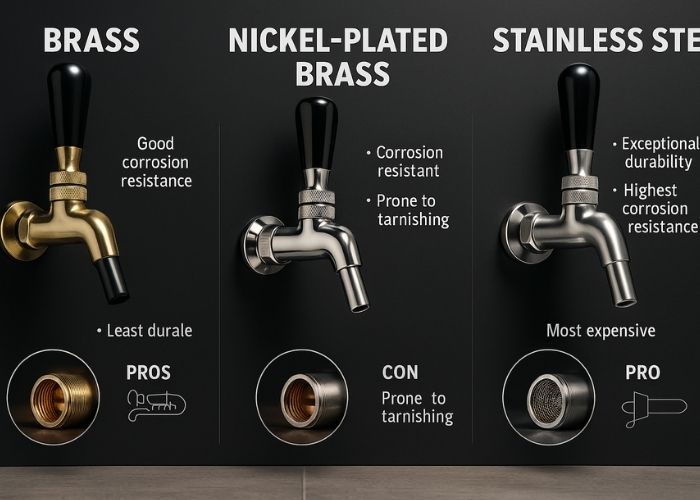
- Brass Beer Taps: A common material with good corrosion resistance and thermal conductivity. However, pay attention to the internal coating material to avoid inferior materials affecting the taste of the beer.
- Stainless Steel Beer Taps: Hygienic, easy to clean, and rust-resistant, suitable for places with high hygiene requirements [7]. Food-grade 304 or 316 stainless steel is the best choice for core components (parts that directly contact beer).
- Ceramic Beer Taps: Beautiful in appearance and decorative, but more expensive.
- Based on Function
- Ordinary Beer Taps: Only provide basic on and off functions.
- Adjustable Flow Beer Taps: Can adjust the amount of beer to meet different taste needs [7].
- Beer Taps with Compensators: Can reduce beer foaming and improve the taste [7].
- Self-Closing Beer Taps: Automatically close the beer tap to avoid waste.
- Based on Valve Design
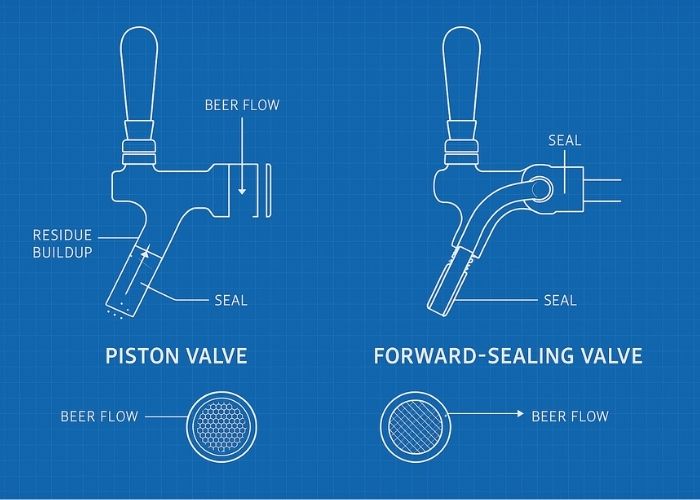
- Standard Taps (Traditional Design): Most use piston valves [7]. Simple to operate, lower cost. The disadvantage is that beer remains inside the tap when closed, which easily breeds bacteria and requires frequent cleaning.
- Forward Sealing Taps: The most recommended design [7]. The valve closes at the very front of the tap, preventing beer from remaining inside the tap. This greatly reduces bacterial growth and reduces cleaning frequency (e.g., Perlick Perl series). This design maximizes the freshness and hygiene of the beer.
Selection Guide: End Consumers
- Define Your Needs
- Do you need a home, commercial, or portable beer tap?
- What are your requirements for the material, function, and appearance of the beer tap?
- What is your budget?
- Pay Attention to Details
- Quality: Choose well-known brands or suppliers with a good reputation to ensure reliable product quality.
- Usability: Is the beer tap easy to operate?
- Cleaning: Is the beer tap easy to disassemble and clean?
- After-sales Service: Does the supplier provide comprehensive after-sales service?
Practical Tip: Choose a beer tap with adjustable flow, which allows you to adjust the beer dispensing speed according to different beer types and personal tastes, avoiding excessive foam [7].
Selection Guide: Wholesalers/Importers
- Find Cost-Effective Suppliers
- Contact multiple suppliers and compare prices, quality, and service.
- Pay attention to the supplier's production capacity and delivery cycle to ensure that your needs are met.
- Understand the supplier's after-sales service policy, as well as quality assurance and return policies.
- Pay Attention to Product Certification
- Ensure that beer taps meet relevant health and safety standards, such as NSF certification.
- Understand whether the product has relevant patents or intellectual property rights to avoid the risk of infringement.
- Establish Long-Term Partnerships
- Establish long-term partnerships with reputable and quality-stable suppliers to obtain more favorable prices and better services.
Practical Tip: Signing a long-term cooperation agreement with suppliers can lock in more competitive prices and ensure a stable supply [7].
Industry Insider: Key to Selecting a Beer Tap
What you might not know is that the internal structure and materials of a beer tap are crucial for the beer's taste and hygiene. Many cheap taps may use chrome-plated brass or even low-grade zinc alloy for their internal components. Prolonged contact with beer can cause these materials to leach metal ions, affecting the beer's flavor, and even promote bacterial growth. True experts will tell you that the core components of a high-quality beer tap (parts that directly contact the beer) must be food-grade 304 or 316 stainless steel [7], or food-grade nickel-plated brass, to ensure pure flavor and hygiene. In addition, the internal finish of the tap is very important; a rough inner surface provides hiding places for microorganisms.
Tip: Choose a beer tap with a simple internal structure that is easy to disassemble, which can greatly improve cleaning efficiency and reduce the risk of bacterial growth [8].
Industry Pain Points
Common pain points with beer taps include difficulty in cleaning and residue buildup. If the tap's structure is complex, has many dead ends, or if internal materials are not corrosion-resistant, beer stone or microbial films can form, affecting the quality and taste of the dispensed beer, and even causing blockages [8]. Another common problem is dripping, which not only causes waste but also makes the bar counter sticky and attracts pests. This usually stems from the degradation or incorrect material selection of the valve seals, especially in high-frequency use and fluctuating temperature environments [8].
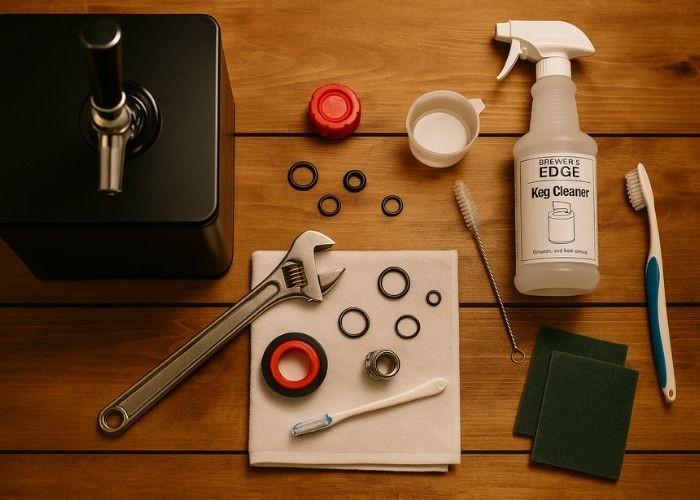
Tip: Regularly replace the seals and other wearing parts of the beer tap, which can effectively prevent dripping and extend the life of the beer tap [8].
Unique Perspective
A "good" beer tap is not just durable; it is a tool that ensures pure beer flavor and ease of operation. Instead of focusing too much on aesthetics (such as various luxurious custom designs), it is better to prioritize its internal materials, valve design (such as piston valves or compensating valves), and ease of cleaning [7]. Sometimes, seemingly simple, classic designs possess engineering principles far superior to those flashy, difficult-to-maintain products. For bar owners, choosing a tap that offers long cleaning and maintenance cycles, stable operation, and is less prone to minor malfunctions will truly bring economic benefits and customer satisfaction.
Specific Application Scenarios
- Professional Bars/Restaurants: Require high dispensing volume, stability, and ease of cleaning and maintenance. They typically choose advanced taps with flow control features [7] that can adapt to different pressures and beer types, thereby reducing foam. Examples include the Perlick Perl 630SS series.
- Home Bars/Kegerators: Focus on ease of installation, simple operation, and reasonable cost. Stainless steel materials [7] are still the preferred choice, but overly complex flow compensation functions may not be necessary. Examples include Intertap or Nukatap series.
- Outdoor/Mobile Beer Carts: Need to consider portability, impact resistance, and stability in various weather conditions. May require a more robust construction and simpler cleaning methods.
- Breweries/Laboratories: Have extremely high requirements for material purity and corrosion resistance and may require special connection methods to adapt to fermenters or testing equipment.
Technical Details
- Materials: Core components (faucet lever, faucet body, handle, spout) are best in food-grade 304 or 316 stainless steel [7]. Brass must be food-grade nickel-plated, with a sufficiently thick and uniform plating to prevent direct contact between beer and brass. Zinc alloy is not recommended for parts that directly contact beer.
- Valve Design:
- Standard Taps (Traditional Design): Most use piston valves [7]. Simple to operate, lower cost. The disadvantage is that beer remains inside the tap when closed, which easily breeds bacteria and requires frequent cleaning.
- Forward Sealing Taps: The most recommended design [7]. The valve closes at the very front of the tap, preventing beer from remaining inside the tap. This greatly reduces bacterial growth and reduces cleaning frequency (e.g., Perlick Perl series). This design maximizes the freshness and hygiene of the beer.
- Flow Control Taps: Have adjustable internal components that allow the operator to precisely control the flow rate based on beer type and pressure, thereby reducing foam and improving efficiency.
- Connection Method: Usually connects to a kegerator tower via a shank. Choose appropriate threads and washers to ensure a leak-proof seal [7].
- Surface Treatment: The exterior is usually polished stainless steel, chrome-plated, or PVD coated. The interior must be smooth, without burrs or pores.
Cost Considerations
The cost of beer taps varies greatly:
- Low Cost: Usually chrome-plated brass or zinc alloy internal components. May have a lower initial investment, but require more frequent cleaning in the long run, may affect beer quality, and have a relatively shorter lifespan.
- Medium Cost: Food-grade nickel-plated brass or partial stainless steel components. Offer good value for money, suitable for most home users or small to medium-sized bars.
- High Cost: Full stainless steel (304 or 316) with forward-sealing design and flow control function [7]. A higher initial investment, but offers significant long-term advantages in terms of beer flavor, hygiene, maintenance frequency, and lifespan, especially for high-traffic commercial venues. Choose reputable brands and consider the availability of spare parts.
Long-Term Performance
A high-quality beer tap, if properly maintained, can last for decades. Key factors affecting long-term performance include:
- Corrosion Resistance of Internal Materials: Beer can be corrosive to some metals, especially with prolonged contact. Stainless steel offers the best corrosion resistance [7].
- Seal Quality: The material (e.g., food-grade rubber or silicone) and durability of O-rings and other seals determine whether dripping occurs.
- Cleaning and Maintenance: Even the best tap requires regular cleaning. Choosing a forward-sealing design can greatly simplify this process and extend cleaning intervals. Regular disassembly, cleaning, and replacement of worn parts (such as seals) are essential [8].
Purchasing Advice
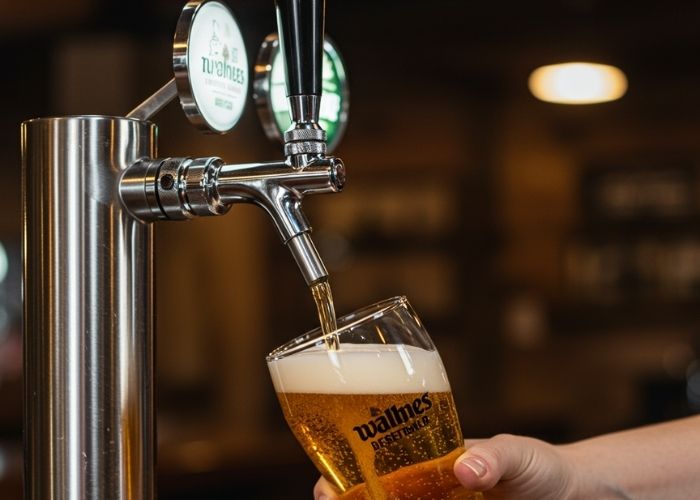
For commercial use, I highly recommend investing in a full stainless steel (304 or 316) forward-sealing beer tap, preferably with flow control functionality [7]. While the initial investment is higher, it maximizes the purity of beer flavor, ensures hygiene, reduces dripping, and lowers maintenance frequency and costs, thereby improving customer experience and operational efficiency. For home users, a food-grade nickel-plated brass forward-sealing tap or a stainless steel standard tap is a good choice; if the budget allows, prioritize a stainless steel forward-sealing tap.
Finally, regardless of the tap chosen, always use food-grade cleaning agents for regular and thorough cleaning [8]. This is the ultimate secret to ensuring beer quality and extending the tap's lifespan.
Table 1: Comparison of Advantages and Disadvantages of Beer Taps with Different Materials
| Material |
Advantages |
Disadvantages |
Applicable Scenarios |
| Brass (Chrome Plated) |
Low Cost |
Poor Corrosion Resistance, May Affect Beer Taste |
Low-Budget Home Use |
| Brass (Nickel Plated) |
Good Corrosion Resistance, Moderate Cost |
May Affect Beer Taste After Coating Wear |
Home Use, Small Commercial Use |
| Stainless Steel |
Excellent Corrosion Resistance, Hygienic |
Higher Cost |
Commercial Use, Places with High Hygiene Requirements |
Table 2: Comparison of Advantages and Disadvantages of Beer Taps with Different Valve Designs
| Valve Design |
Advantages |
Disadvantages |
Applicable Scenarios |
| Piston Valve |
Simple Structure, Low Cost |
Residual Beer, Easy to Breed Bacteria |
Low-Budget Home Use |
| Forward Sealing Valve |
No Residual Beer, Hygienic |
Higher Cost |
Commercial Use, Places with High Hygiene Requirements |
Table 3: Applicable Scenarios for Beer Taps with Different Functions
| Function |
Advantages |
Disadvantages |
Applicable Scenarios |
| Ordinary |
Simple Operation, Low Cost |
Single Function |
Low Requirements for Beer Quality, Limited Budget |
| Adjustable Flow |
Controllable Flow, Reduces Foam |
Slightly More Complex Structure, Slightly Higher Cost |
Certain Requirements for Beer Quality, Need to Control Foam |
| With Compensator |
Reduces Foam, Improves Taste |
Complex Structure, High Cost |
High Requirements for Beer Quality, Need to Minimize Foam |
Recommended Internal Links:
- Learn more about beer machine buying guide, please refer to our "Home Kegerator Buying Guide"
- Learn more about beer cleaning and maintenance, please refer to our "Beer Machine Cleaning and Maintenance Guide"
- Learn more about different beer types, please refer to our "World Beer Types Guide"
Recommended External Links:
- Learn more about NSF certification, please refer to NSF International
- Learn more about beer brewing, please refer to Wikipedia
- Learn more about beer tap brands, please refer to Perlick


