Garden Faucet Replacement: A Detailed DIY Guide
Want to add a convenient water source to your garden? Whether you're looking to replace an old faucet or install a new one, this article will provide you with the most comprehensive information and advice to help you complete the task easily.
Last Updated: August 8, 2025 | Estimated Reading Time: 15 minutes
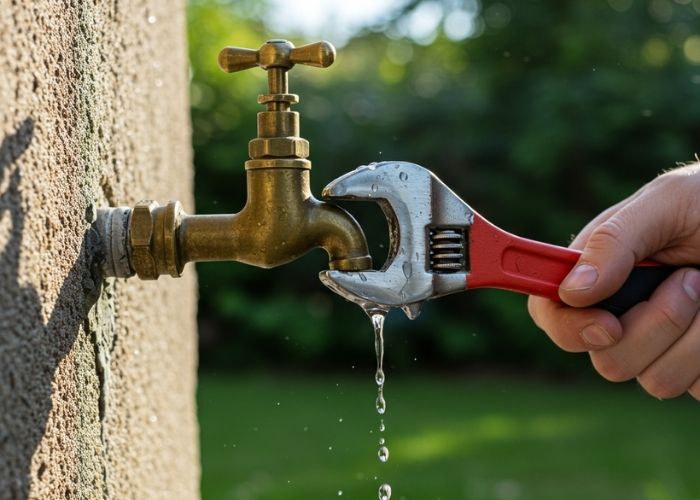
This Article Will Answer For You:
- How to choose garden faucets with suitable materials and installation methods according to different needs?
- What tools and materials are needed to replace or install a garden faucet?
- How to safely remove the old faucet and install the new faucet?
- What are the installation precautions for faucets with different installation methods (wall-mounted and standing)?
- How to test and inspect the newly installed faucet to ensure there are no leaks?
Search Intent Analysis
- Core Intent: Users are looking for a detailed guide on how to replace or install a garden faucet. This is a clear informational search intent. Users want to understand the different options, steps, and precautions.
- User Stage: Users are in the preparation stage before implementing the project. They may need to replace a damaged faucet or install a faucet for a new garden project. They may have some DIY experience, but also need professional guidance and advice.
- Potential Pain Points:
- Uncertain about how to choose the right material and type of faucet.
- Worried about problems during installation, such as leaks or damage to pipes.
- Lack of professional tools and skills to complete the installation.
- Unfamiliar with the precautions for different installation methods.
- Limited budget and hoping to find a cost-effective solution.
User Persona Analysis
Based on the characteristics of garden faucets and the provided customer data, the main target user groups may be:
- End Customers (B2C):
- Homeowners: Need to replace or install garden faucets, usually have some DIY skills, but want to get professional guidance and advice.
- Gardening Enthusiasts: Need to provide a convenient water source for the garden and have certain requirements for the quality and appearance of the faucet.
- Wholesalers and Importers: They need to understand market demand and product trends to supply their downstream customers (retailers, gardening centers, etc.). They will focus on product standards, compatibility, quality, supply stability, and packaging.
- Landscape Designers: Need to choose suitable garden faucets for landscape projects, focusing on aesthetics, materials, compatibility with the overall design style, and functionality.
- Gardening Centers/Retailers: Need to provide customers with various types of garden faucets and provide installation and maintenance advice.
- Property Management Companies: Responsible for maintaining the gardens and landscaping of communities or commercial places, and need to regularly replace and maintain garden faucets.
Understanding Garden Faucets
Garden faucets, also known as frost-proof faucets or hose bibs, are used to connect garden hoses for outdoor watering, cleaning, and other water needs.
Material Classification
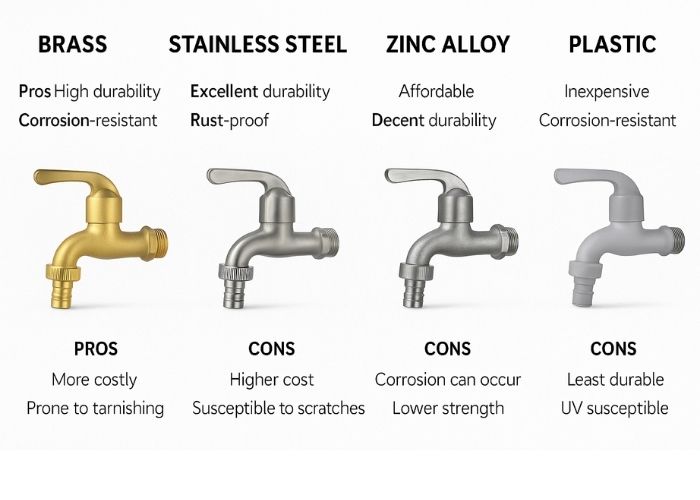
- Brass Faucets: Traditional and durable, with good corrosion resistance.
- Zinc Alloy Faucets: Relatively inexpensive, but less corrosion resistant than brass faucets.
- Stainless Steel Faucets: Especially 304 stainless steel, has excellent corrosion resistance and can withstand sun and rain, making it ideal for outdoor use.
- Plastic Faucets: Cheap, but with a shorter lifespan.
Installation Method Classification
- Wall-Mounted Faucets: The water pipe is hidden in the wall, with a simple appearance.
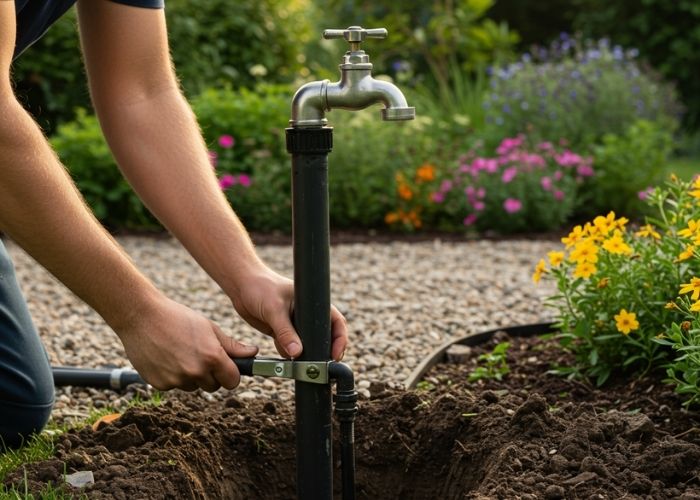
- Standing Faucets: The water pipe extends upwards from the ground, usually used in garden centers or places requiring higher water outlets.
Preparation
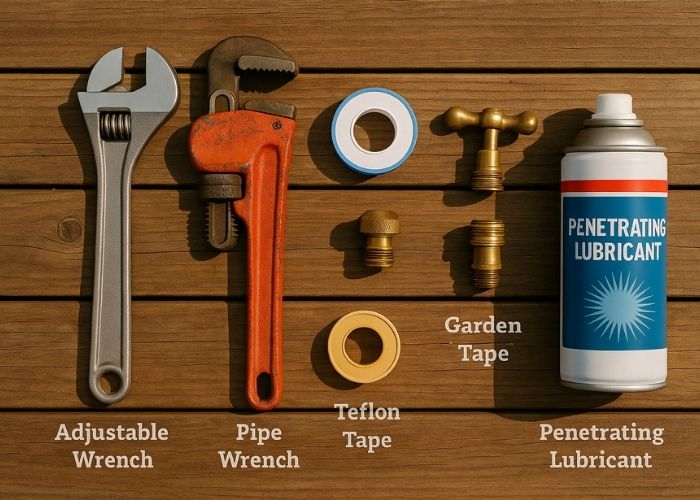
Tool List
- Adjustable wrench
- Pipe wrench
- Screwdriver (as needed)
- Teflon tape
- New garden faucet
- Water pipe (if you need to extend or replace it)
- Hose connector (as needed)
Safety Precautions
- Turn off the main water valve: Before starting any work, be sure to turn off the main water valve in the house to prevent water from gushing out.
- Drain the water in the pipes: Open the garden faucet to drain the remaining water in the pipes.
Steps to Replace a Garden Faucet
Step 1: Remove the Old Faucet
- Loosen the connection: Use an adjustable wrench or pipe wrench to rotate counterclockwise to loosen the connection between the old faucet and the water pipe. If the connection is very tight, try spraying penetrating lubricant (such as WD-40) on the connection and let it sit for a few minutes before trying again.
- Remove the old faucet: Carefully remove the old faucet, paying attention to any remaining drops of water. Check the connecting threads for damage and clean them if necessary.
Step 2: Install the New Faucet
- Prepare the new faucet: Check the new faucet for damage or missing parts.
- Wrap Teflon tape: Wrap 3-5 turns of Teflon tape clockwise on the connecting threads of the new faucet. This helps ensure a tight seal and prevents leaks.
- Connect the water pipe: Connect the new faucet to the water pipe and rotate it clockwise to tighten it. Use a wrench to tighten it moderately to ensure the connection is firm, but do not over-tighten it to avoid damaging the threads.
- Fix the faucet: If it is a wall-mounted faucet, fix it on the wall with screws. If it is a standing faucet, make sure its base is stable.
Step 3: Connect the Water Pipe (If Necessary)
- Measure and cut: If you need to extend or replace the water pipe, use a tape measure to measure the required length, and use a cutter or saw to cut the water pipe.
- Connect the water pipe: Use a suitable hose connector to connect the new water pipe to the old water pipe. Ensure that the connection is fixed with a hose clamp or clamp to prevent it from falling off.
Step 4: Test and Inspect
- Slowly open the main water valve: Slowly open the main water valve of the house to allow water to gradually enter the pipeline.
- Check for leaks: Carefully check the connection between the faucet and the water pipe, as well as the connection between the water pipe and the hose connector, and observe whether there is any leakage. If leakage is found, immediately close the main water valve and tighten the connection. Repeat this process until there are no leaks at all connections. Open the faucet to test and make sure the water flow is normal.
Practical Tip: Before connecting the water pipe, you can use a wire brush to clean the threads of the water pipe to increase friction and improve the sealing effect.
Notes on Different Installation Methods
Wall-Mounted Faucet
- Embedded water pipe position: Before installation, you need to determine the embedded position of the water pipe to ensure that it is aligned with the position of the faucet.
- Wall waterproofing treatment: After installing the faucet, waterproof the wall to prevent moisture from seeping into the wall.
Standing Faucet
- Base fixation: The base of the standing faucet needs to be firmly fixed on the ground to prevent it from tipping over.
- Drainage: Ensure that there are good drainage facilities near the standing faucet so that spilled water can be discharged in time.
Practical Tip: When installing a standing faucet, you can place a rubber pad under the base to increase stability and prevent rust.
Professional Tips
- Choose a high-quality faucet: To ensure the durability and reliability of the faucet, it is recommended to choose products from well-known brands with guaranteed quality.
- Use suitable tools: Using the correct tools can avoid damage to the faucet or water pipe and improve installation efficiency.
- Patience and meticulousness: Installing a faucet requires patience and meticulousness. Follow the steps step by step to ensure that each connection is firm and reliable.
More Choices: Smart Garden Faucets
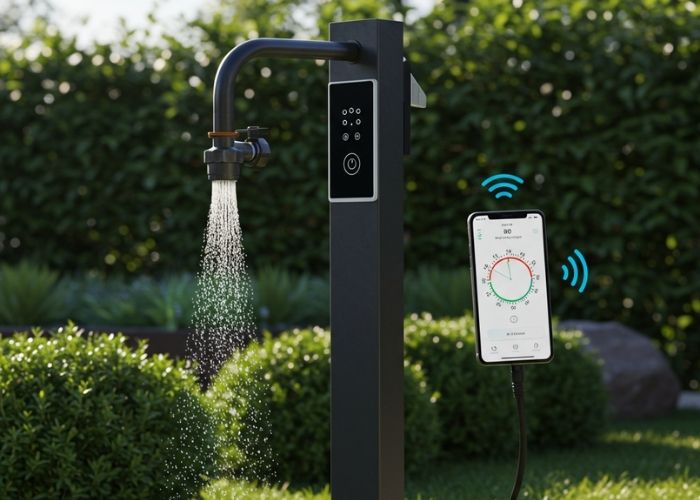
With the development of technology, smart garden faucets have also appeared on the market. These faucets can be controlled through a mobile phone APP and can set functions such as timed watering and water volume control, bringing more convenience to your garden management 2.
Table 1: Comparison of Advantages and Disadvantages of Garden Faucets with Different Materials
| Material |
Advantages |
Disadvantages |
Applicable Scenarios |
| Brass |
Durable, Corrosion Resistant |
Higher Cost |
Most Outdoor Environments |
| Zinc Alloy |
Cheap Price |
Poor Corrosion Resistance |
Limited Budget, Low Durability Requirements |
| Stainless Steel |
Good Corrosion Resistance, Hygienic |
Higher Cost |
Environments with High Requirements for Water Quality and Hygiene |
| Plastic |
Very Cheap Price |
Short Lifespan, Easy to Age |
Temporary Use or Low Budget |
Table 2: Comparison of Advantages and Disadvantages of Garden Faucets with Different Installation Methods
| Installation Method |
Advantages |
Disadvantages |
Applicable Scenarios |
| Wall-Mounted |
Beautiful, Space-Saving |
Installation Requires Pre-Embedded Water Pipes |
Newly Decorated Gardens or Gardens with Pre-Embedded Water Pipes |
| Standing |
Easy to Install, Flexible |
Takes up Space, Needs to be Fixed |
Existing Gardens that Need a Flexible Water Source |
Table 3: Functions and Advantages of Smart Garden Faucets
| Function |
Advantages |
| APP Control |
Remote Control, Convenient and Fast |
| Timed Watering |
Saves Labor, Automatic Management |
| Water Volume Control |
Precise Control, Saves Water |
| Data Monitoring |
Monitor Soil Moisture, Understand Plant Growth |
Recommended Internal Links:
- Learn more about garden hose selection, please refer to our "Garden Hose Buying Guide"
- Learn more about garden irrigation systems, please refer to our "Garden Irrigation System Installation Guide"
- Learn more about water pipe maintenance, please refer to our "Water Pipe Maintenance Tips"
Recommended External Links:
- Learn more about faucet standards, please refer to American Society of Plumbing Engineers (ASPE)
- Learn more about water pipe materials, please refer to Wikipedia
- Learn more about faucet brands, please refer to Kingston Brass 134, Delta Faucet 2


