The Ultimate Guide to Faucet Cleaning and Maintenance: Extend Life and Restore Shine
Faucets are one of the most frequently used bathroom hardware in daily life, but their cleaning and maintenance are often overlooked. As an expert with 38 years of experience in the sanitary ware industry, I will provide you with a detailed guide from the aspects of stain type, material, cleaning method, maintenance, etc., to help you easily handle the cleaning and maintenance of faucets, extend the service life, and make them shine.
Faucet Cleaning: Treat the Symptoms, Defeat Each
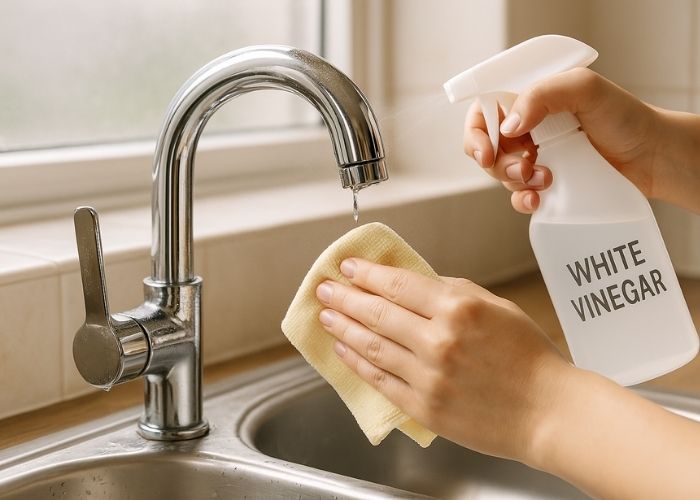
Different types of stains require different cleaning methods to achieve the best results. Here are some common cleaning methods for faucet stains:
-
Water stains/scale:
- Principle: Water stains and scale are formed by the long-term accumulation of minerals in the water and are alkaline.
- Cleaning method: Use the principle of acid-base neutralization and wipe with a weak acidic solution.
- White vinegar: Mix white vinegar and water in a 1:1 ratio, spray on the faucet, let it stand for 15-20 minutes, and then wipe it clean with a soft cloth.
- Lemon juice: Cut the lemon into slices and wipe the scale on the surface of the faucet directly, and then rinse with clean water.
- Special cleaner: Purchase a special faucet cleaner and use it according to the instructions.
- Tip: For stubborn scale, you can soak a soft cloth in white vinegar solution, apply it to the scale surface, and let it stand for a longer time for better results.
-
Oil stains or stubborn stains:
- Principle: Oil stains have strong adhesion and require detergents with oil removal capabilities.
- Cleaning method:
- Detergent: Apply detergent to the oil stain, wipe gently with a soft cloth, and then rinse with clean water.
- Baking soda: Mix baking soda and water into a paste, apply it to the oil stain, let it stand for 10-15 minutes, and then wipe it clean with a soft cloth.
- Tip: If the oil stain is heavy, you can soak it in warm water first, and then clean it.
-
Rust or oxide layer:
- Principle: Rust is formed by metal oxidation and requires detergents with rust removal capabilities.
- Cleaning method:
- Special rust remover: Purchase a special rust remover and use it according to the instructions.
- Toothpaste: Apply toothpaste to the rust stain, wipe repeatedly with a soft cloth, and then rinse with clean water.
- Tip: For small areas of rust, you can use a cotton swab dipped in rust remover for local treatment.
Differentiated Faucet Cleaning Solutions: Material, Surface Treatment, Type
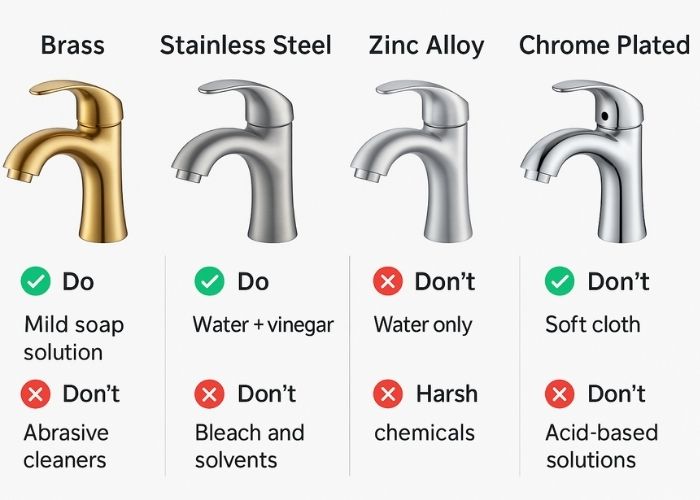
Faucets with different materials, surface treatments, and types should also have different cleaning methods:
-
Material:
- Brass faucet: Avoid using cleaners containing abrasives to avoid damaging the surface coating.
- Stainless steel faucet: You can use a special stainless steel cleaner to keep it shiny and new.
- Zinc alloy faucet: Avoid prolonged contact with water and keep it dry.
- Tip: If the coating of the zinc alloy faucet is damaged, it is more likely to rust, it is recommended to replace it in time.
-
Surface treatment:
- Electroplated faucet: Avoid using strong acid and alkaline cleaners to avoid corroding the coating. Polishing regularly with car wax can increase gloss and form a protective film 3. Avoid contact with chemical residues such as cosmetics 3.
- Brushed faucet: Wipe along the brushed direction to avoid scratches.
- Painted faucet: Avoid using cleaners containing organic solvents to avoid dissolving the paint surface.
- PVD coated faucet: The PVD coating has high hardness and is wear-resistant. You can use relatively mild cleaners when cleaning.
-
Faucet type:
- Sensor faucet: Be sure to disconnect the power supply before cleaning to avoid accidents.
- Thermostatic faucet: Regularly check the thermostatic valve core to ensure it is working properly. If the water temperature is unstable, you may need to ask a professional to repair it 2.
Faucet Deep Cleaning: Details Show the Truth
The deep cleaning of the faucet mainly includes the following aspects:
-
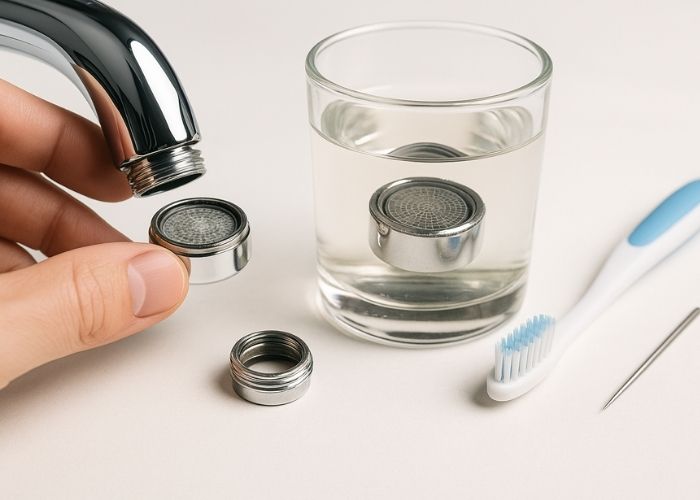
Cleaning of Aerator Insert, 4:
- Problem: The Aerator Insert is easily blocked by impurities in the water, resulting in problems such as bifurcated water flow and reduced water flow 4.
- Cleaning method:
- Use a wrench or pliers to unscrew the Aerator Insert.
- Use a toothbrush or fine needle to remove impurities on the Aerator Insert.
- Soak the Aerator Insert in white vinegar for 30 minutes to remove scale.
- Rinse the Aerator Insert with clean water and reinstall it.
- Tip: Applying a small amount of petroleum jelly on the aerator can reduce the generation of scale.
-
Scale blockage of shower outlet:
- Problem: After the shower is used for a long time, the water outlet is easily blocked by scale, which affects the shower experience.
- Cleaning method:
- Use a fine needle or toothpick to clear the blocked water outlet.
- Soak the shower head in white vinegar or citric acid for 30 minutes to remove scale.
- Rinse the shower head with clean water and reinstall it.
Faucet Maintenance: Extend Life, Start from Every Little Thing
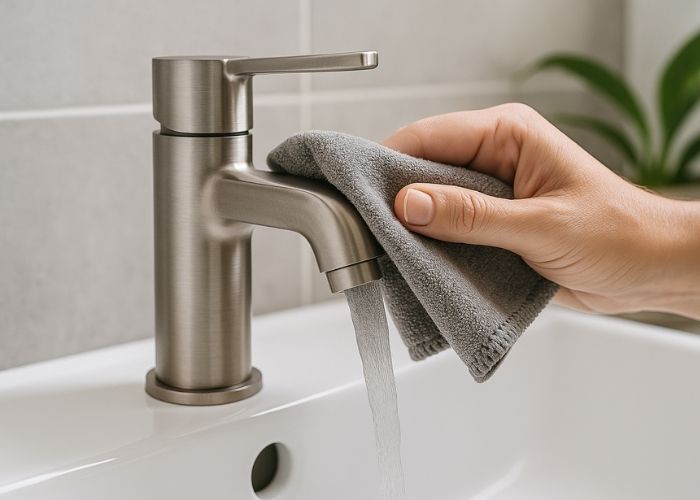
Good usage habits and regular maintenance can effectively extend the life of the faucet3:
-
Optimize usage habits:
- Avoid using excessive force: Do not use excessive force to turn the faucet on and off to avoid damaging the valve core.
- Avoid frequent switching: Try to reduce unnecessary switching times and reduce valve core wear.
- Avoid contact with hard objects: Do not let the faucet contact sharp or rough objects to avoid scratching the surface.
- Tip: Tell family members and children the correct usage methods to reduce unnecessary damage.
-
Regular maintenance:
- Weekly maintenance: Clean and dry the surface of the faucet with a soft cloth, check for any signs of leakage, and test the smoothness of the handle operation.
- Monthly maintenance: Deep clean the aerator of the water outlet, check all connection points, and test whether the water flow and temperature adjustment are normal.
- Quarterly maintenance: Comprehensively check the sealing performance, lubricate moving parts, and perform professional deep cleaning.
- Regularly check the connection: Check whether the connection between the faucet and the water pipe is loose or leaking, and tighten or replace it in time.
- Regular cleaning: Clean the faucet regularly according to the above methods to keep it clean and shiny.
- Tip: Regularly check the water pipes to prevent the water pipes from aging and bursting, causing damage to the faucet.
-
Targeted maintenance for different surfaces and materials:
- Electroplated surface: Car wax can be used for polishing to increase gloss and form a protective film 3.
- Stainless steel surface: A special stainless steel maintenance agent can be used to prevent fingerprints and water stains 3. Wipe along the grain direction to maintain beauty 3.
- Brass surface: Special metal care products can be used, and prolonged contact with acidic substances should be avoided. Regular polishing is required to prevent oxidation and discoloration 3.
Common Problem Solutions
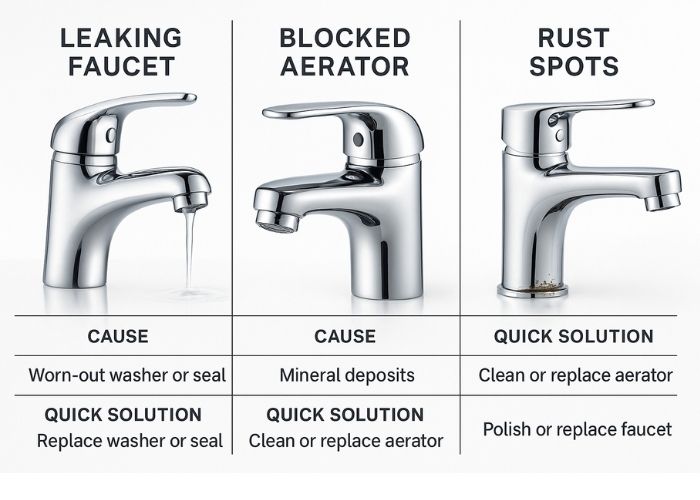
| Problem |
Possible Cause |
Solution |
| Faucet Leakage |
Washer aging 2, valve core damage, loose connection |
Replace washer 2, repair valve core, tighten connection 2 |
| Reduced Water Flow |
Aerator blockage 4, foreign objects in the water pipe, insufficient water pressure |
Clean aerator 4, check water pipe, check water pressure |
| Loose Handle |
Fixing screw loose, handle base worn |
Tighten fixing screw, replace handle base |
When Professional Repair is Needed
- Persistent leakage cannot be solved by yourself 2.
- Internal parts need to be replaced.
- The plating layer is severely damaged and needs professional repair.
Choose a brand authorized service point, check the service evaluation and certification, and confirm the use of original parts 2.
Maintenance Precautions
- Avoid using rough cleaning tools such as steel wire balls to wipe the electroplated surface to avoid scratching the coating.
- Before cleaning the sensor faucet, be sure to disconnect the power supply to avoid the danger of electric shock.
- When replacing faucet parts, try to choose original parts to ensure compatibility and service life 2.
Interactive Discussion
How many years have you used your faucet? What are some cleaning tips? Welcome to share your experience in the comment area!
Recommended Internal & External Links
Authoritative organization:
- Recommended Internal Links:
- Authoritative organization:
- Wikipedia:
- Related product links:


